Crop or Consequence: Inside the Battle Over the Riding Whip That Is Dividing American Racing
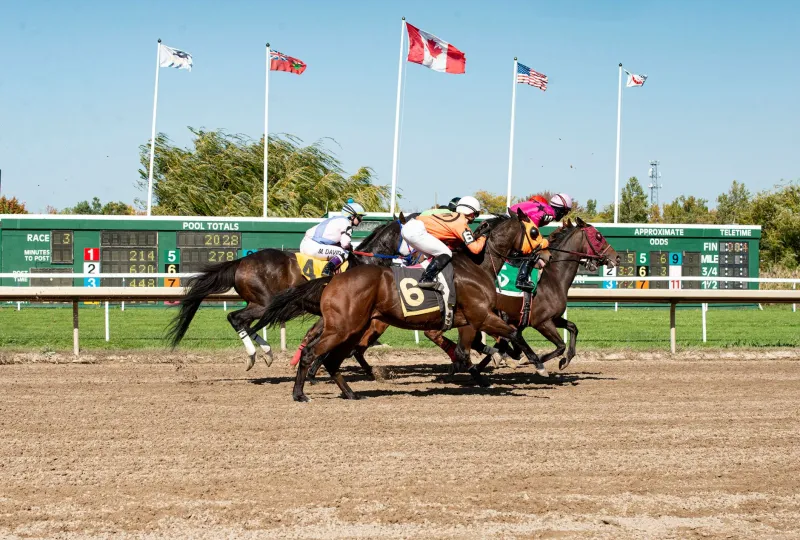
In the final furlong of a major stakes race, with a field of thoroughbreds driving toward the wire at speeds approaching forty miles per hour, the riding crop is simultaneously one of the most consequential and most contested objects in American sport. For the jockey wielding it, the crop is a precision instrument — a means of maintaining rhythm, correcting balance, and communicating urgency in a language that horse and rider have developed together through months of training. For the animal welfare advocate watching from the grandstand or the television broadcast, it is something considerably less defensible.
This disagreement is not new, but its intensity has increased markedly in recent years, propelled by a convergence of scientific research, shifting public attitudes toward animals, and a regulatory landscape that has begun to fragment along state lines in ways that threaten the coherence of American racing as a unified competitive enterprise.
What the Science Actually Shows
The empirical case regarding whip use in thoroughbred racing is more nuanced than either side of the debate typically acknowledges. Research conducted in Australia and the United Kingdom — the two jurisdictions that have done the most to restrict whip use in recent years — has produced findings that complicate the traditional arguments on both sides.
On the question of pain and distress, studies examining cortisol levels and behavioral indicators in horses subjected to whip contact have produced mixed results, with some research suggesting that the physical impact of a padded riding crop on a horse moving at racing speed is less significant than the visual impression might suggest, and other work indicating measurable stress responses associated with repeated contact. The difficulty of conducting controlled research under actual racing conditions has limited the conclusiveness of the available evidence.
On the question of whether the whip meaningfully affects racing outcomes, the Australian research has been particularly interesting. Studies examining race results before and after the introduction of stricter whip regulations in New South Wales found no statistically significant change in the frequency of close finishes or the distribution of outcomes that might be attributed to reduced jockey influence in the final stages of races. This finding is contested by jockeys and trainers who argue that the research methodology failed to capture the full range of situations in which the whip serves a legitimate competitive function.
What the science has not resolved — and may not be capable of resolving to the satisfaction of all parties — is the fundamental question of whether the use of a whip on a horse engaged in a competitive race constitutes an act of cruelty. That determination involves value judgments about the nature of the human-animal relationship that empirical research alone cannot adjudicate.
The Jockey's Perspective
For working jockeys, the crop debate touches something close to professional identity. The ability to ride a finish — to extract maximum effort from a horse in the critical final stages of a race through a combination of physical communication and tactical judgment — is among the most highly valued skills in the profession, and the whip is regarded as an integral component of that skill set.
Jockeys interviewed for this article emphasized the distinction between the crop as a pain-inflicting instrument and the crop as a communication device. "When you're asking a horse to run through fatigue in the stretch, you're not hurting him — you're reminding him that the race isn't over," one veteran rider explained. "There's a difference between a horse that doesn't want to run and a horse that needs to be encouraged to keep going. That's what the whip is for."
The concern among riders regarding stricter regulations is not merely philosophical. In jurisdictions that have adopted significant restrictions on whip use, jockeys have raised legitimate safety questions about their ability to correct a horse that is drifting into a competitor, or to maintain control of an animal that is beginning to lose focus at a moment when a collision could injure both horse and rider. These are not hypothetical scenarios; they are situations that experienced riders encounter with some regularity.
The Animal Welfare Argument
Organizations including the Humane Society of the United States and PETA have campaigned for whip restrictions in American racing with increasing sophistication and public relations effectiveness. Their argument rests on a straightforward premise: that striking an animal is inherently problematic, and that the burden of proof should fall on those who wish to continue the practice rather than on those who seek to end it.
The welfare advocates point to international precedents as evidence that restrictions are workable in practice. Britain's Jockey Club has progressively tightened whip regulations over several decades, most recently limiting riders to seven strokes in a flat race and requiring a minimum interval between uses. Norway has moved further, effectively prohibiting the whip as an instrument of encouragement while retaining its use as a safety tool. These changes have not, their proponents argue, materially diminished the competitive quality of racing in those jurisdictions.
The counter-argument — that British and Norwegian racing cannot be directly compared to the American context, where racing surfaces, race distances, field sizes, and competitive cultures differ substantially — is one that welfare advocates tend to regard as a delaying tactic rather than a genuine analytical objection. The fundamental question, they maintain, is whether the welfare of the horse justifies the use of a whip, and that question does not change with the jurisdiction.
A Fractured Regulatory Map
Perhaps the most immediately practical problem created by the whip debate is the regulatory fragmentation it has produced across American racing jurisdictions. California, New York, and Kentucky have each approached whip restrictions differently, creating a patchwork of rules that jockeys, trainers, and stewards must navigate as they move between circuits.
The Horseracing Integrity and Safety Authority, which assumed responsibility for anti-doping and medication control under federal mandate, does not currently hold jurisdiction over whip regulations, which remain the province of individual state racing commissions. Advocates for uniform national standards on both sides of the debate have expressed frustration with this arrangement, arguing that the absence of a consistent framework creates competitive inequities and makes coherent public communication about the sport's welfare commitments nearly impossible.
The practical consequences of regulatory divergence are not trivial. A jockey accustomed to the rules in one state may inadvertently violate the standards of another, generating suspensions that disrupt competitive schedules and create the impression of chronic non-compliance even when the underlying conduct is consistent. For a sport that depends on public trust, this kind of visible inconsistency carries reputational costs that accumulate over time.
Racing's Larger Reckoning
The whip debate does not exist in isolation. It is one dimension of a broader conversation about the social license of thoroughbred racing in an era of heightened public sensitivity to animal welfare concerns. The industry's response to medication reform, catastrophic injury reduction, and aftercare programs has demonstrated that meaningful change is possible when sufficient institutional will exists. Whether that same will can be marshaled around the whip question remains to be seen.
What is clear is that the current state of affairs — in which the sport is simultaneously defending the whip's legitimacy, experimenting with restrictions, and watching international peers chart divergent courses — is not a stable equilibrium. Racing's leadership will eventually be required to make a more definitive choice about where the sport stands, and the consequences of that choice will extend well beyond the final furlong of any individual race.