Life After the Limelight: The Divergent Paths Champion Thoroughbreds Travel When Racing Ends
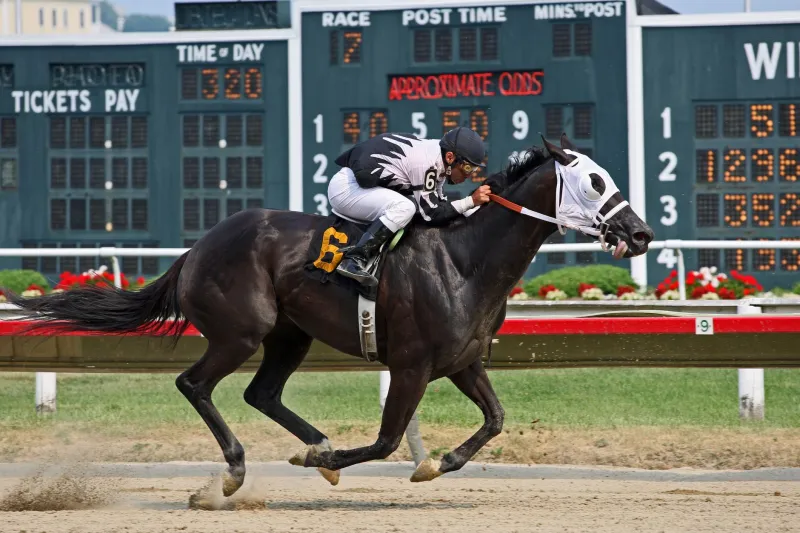
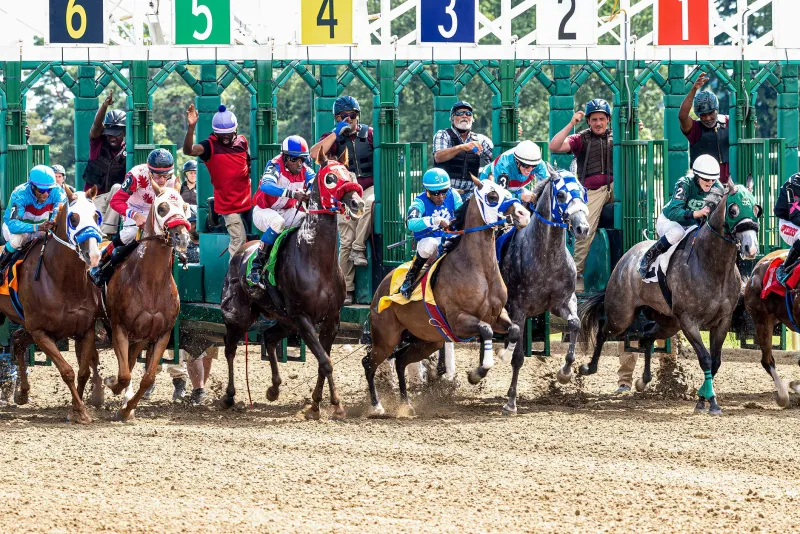
On the afternoon a champion thoroughbred makes its final competitive appearance, it enters a world for which no race has prepared it. The shedrow routine, the familiar sounds of a racing stable, the daily rhythms that have structured its existence since early adolescence — all of it dissolves into a transition that the horse cannot anticipate and that its connections must navigate with both commercial and ethical clarity.
The outcomes, across the broad population of retired American thoroughbreds, are strikingly varied. Champions and allowance horses alike face a range of post-racing possibilities shaped by their gender, their physical condition, their pedigree, and — perhaps most consequentially — the values and resources of the humans responsible for them.
The Breeding Shed: Promise and Disappointment
For elite male thoroughbreds, the breeding farm has historically represented the most financially logical destination. A Grade I winner with fashionable bloodlines can command stud fees that dwarf even the most generous purse structures, and the arithmetic of a successful stallion career — dozens of mares bred annually, each booking generating substantial revenue — makes the breeding shed an obvious priority for major ownership groups.
The reality, however, is considerably more complicated. The thoroughbred breeding industry operates on a fundamental paradox: the qualities that make a horse a great racehorse are not reliably heritable, and the qualities that make a stallion commercially successful are not always the same qualities that produce racehorses of genuine distinction.
History is populated with horses that dominated the racetrack and subsequently failed to transmit their brilliance to the next generation. The reasons are multiple. Conformation faults that a champion overcame through sheer athleticism may be passed along to offspring who lack the compensating physical gifts. Racing temperament — the competitive fire that drives a horse to run through fatigue — appears to have a complex genetic architecture that breeders are only beginning to understand through genomic research.
Conversely, some modest racehorses have proven transformative at stud, producing offspring that substantially outperformed their own competitive records. The industry's inability to predict these outcomes with consistency remains one of breeding's most humbling realities.
Why Some Champions Produce Mediocre Offspring
The question of why great racehorses sometimes fail as sires or broodmares has occupied geneticists, veterinarians, and breeders for generations. Several contributing factors have emerged from both empirical observation and, more recently, genomic analysis.
First, the phenomenon of heterosis — the tendency of hybrid vigor to produce exceptional individuals who do not reliably pass along their exceptional traits — may explain some portion of the gap between racing achievement and breeding success. A horse that benefited from a particularly fortunate combination of parental genetics may not be able to replicate that combination in its own offspring.
Second, the role of the mare is frequently underestimated in popular discussion of breeding outcomes. Industry research consistently suggests that the dam contributes at least as significantly to a foal's racing potential as the sire, yet public conversation about breeding programs tends to center disproportionately on stallion selection. Champions bred to mares of insufficient quality frequently produce results that reflect the maternal contribution more than the paternal.
Third, management practices at breeding farms — nutrition, exercise regimens, and the timing and frequency of breeding — can influence foal development in ways that interact with genetic potential. A genetically gifted foal raised in suboptimal conditions may never reach the ability its bloodlines suggested.
Mares, Retraining, and the Expanding Universe of Second Careers
For female champions, the post-racing landscape is shaped by different commercial pressures. A graded stakes-winning mare carries genuine value as a broodmare, and the most accomplished fillies and mares are typically acquired by major breeding operations for precisely that purpose. Their offspring, particularly when bred to fashionable stallions, can generate sale prices that justify the investment many times over.
Yet a growing number of connections — motivated by a combination of ethical consideration and changing cultural attitudes toward equine welfare — have begun exploring alternative paths for mares whose breeding value is limited or whose owners prefer a different legacy for their animals. Retraining programs, which prepare former racehorses for careers in show jumping, dressage, eventing, and recreational riding, have expanded substantially over the past decade.
Organizations such as the Retired Racehorse Project and the Thoroughbred Aftercare Alliance have brought professional structure to what was once an informal network of individual rescues and repurposing efforts. Their work has demonstrated that thoroughbreds — long assumed to be too hot-blooded and high-strung for disciplines outside racing — are in fact remarkably adaptable athletes when given appropriate transition time and skilled retraining.
The Sanctuary Movement and Its Growing Influence
Perhaps the most significant development in the post-racing landscape over the past decade has been the emergence of dedicated equine sanctuaries as a mainstream option for retired thoroughbreds, including high-profile champions whose owners seek permanent retirement rather than breeding or retraining.
Facilities such as Old Friends Equine in Georgetown, Kentucky, have demonstrated that the sanctuary model can serve both welfare and cultural purposes simultaneously. Old Friends houses dozens of retired racehorses — including Grade I winners and fan favorites — and operates as a tourist destination that connects the public directly with animals that might otherwise fade from visibility entirely.
The sanctuary movement reflects a broader shift in how segments of the racing industry conceptualize their obligations to the horses that generate its revenues. Aftercare funds, now required contributions at many American racetracks, have provided financial infrastructure for these efforts. Major owners and breeding operations have become increasingly visible in their support of aftercare initiatives, recognizing that the industry's social license depends in part on demonstrable commitment to the horses whose careers have ended.
A Reckoning Worth Having
The post-racing lives of champion thoroughbreds are, in aggregate, a mirror held up to the sport itself. Where the breeding shed delivers on its promise, it reflects the genuine depth of human understanding of equine genetics and development. Where it disappoints, it reminds the industry that the horse remains, in important ways, beyond complete prediction or control.
And where sanctuaries and retraining programs have stepped into spaces that commercial logic once left empty, they suggest that the sport's relationship with its athletes need not end at the final furlong — that the responsibility incurred in the winning of a race extends, properly understood, well beyond the presentation of a trophy.