The Impossible Crown: Why Consecutive Triple Crown Glory May Be the Sport's Last Unconquered Frontier
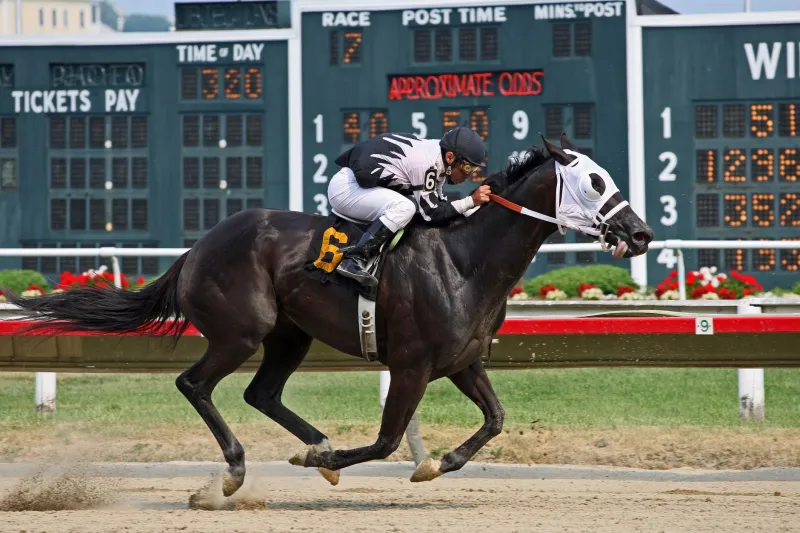
When Justify crossed the wire at Belmont Park in June 2018, the racing world exhaled a collective breath it had been holding for 37 years. The big chestnut colt, trained by Bob Baffert and owned by WinStar Farm and its partners, had done what only twelve horses before him had managed across more than a century of American racing: win the Kentucky Derby, the Preakness Stakes, and the Belmont Stakes in the same spring campaign.
Six years have since elapsed. No horse has come close to replicating that achievement. And the question that increasingly occupies the analytical corners of the sport is not simply when the next Triple Crown winner will emerge — but whether the structural conditions of modern thoroughbred racing have rendered back-to-back Triple Crown champions a mathematical near-impossibility.
What the Numbers Actually Show
The historical record provides a useful baseline. Of the thirteen horses who have completed the Triple Crown, none was followed immediately by another. The closest the sport came to consecutive sweeps was the 1977-1978 era, when Seattle Slew's 1977 triumph preceded Affirmed's 1978 classic by a single year — a proximity that has never been replicated.
Between 1978 and 2015, no horse won the Triple Crown at all — a drought of 37 years that ended only when American Pharoah swept the series under trainer Bob Baffert. Justify followed three years later, also under Baffert's care. The fact that the sport's two most recent Triple Crown champions share a trainer is itself analytically significant, suggesting that specific preparation philosophies may be as important as raw equine talent in navigating the series.
Since 2018, horses have won two of the three classics — Tiz the Law, Essential Quality, and others have approached the threshold — but none has cleared all three gates. The window of opportunity, it appears, has narrowed considerably.
The Modern Veterinary Calculus
Perhaps no factor has reshaped the Triple Crown landscape more fundamentally than the evolution of veterinary protocols surrounding three-year-old thoroughbreds in the spring. Contemporary veterinary medicine has made the sport significantly safer for horses, but it has also introduced new variables into the classic preparation calculus.
Mandatory veterinary examinations at Triple Crown venues, expanded scratch authority for track veterinarians, and heightened owner and trainer sensitivity to pre-race physical assessments have all created conditions in which a horse showing even minor signs of stress may be withdrawn from a race that its connections would once have contested. This is, without question, a positive development for equine welfare. It is also, however, a development that statistically reduces the likelihood of any given horse completing all three races.
Bone density studies and biomechanical analyses of three-year-olds have further illuminated why the five-week window between the Derby and the Belmont places extraordinary demands on young horses whose skeletal systems are still maturing. The science, in short, has made us more aware of what we are asking these animals to do — and that awareness has translated into more conservative management decisions at precisely the moments when boldness would be required.
Schedule, Surface, and the Competition Variable
The Triple Crown's scheduling structure — the Derby on the first Saturday in May, the Preakness two weeks later, and the Belmont five weeks after the Derby — has remained essentially unchanged for decades. What has changed is the competitive context surrounding those races.
The rise of horses shipping from Europe and Japan to contest the Belmont specifically has introduced a new dimension of competition. Horses that bypassed the Derby and Preakness arrive at Belmont Park fresh, well-rested, and prepared for a single peak effort. Against a Derby-Preakness winner carrying the accumulated fatigue of two grueling races in a fortnight, this freshness represents a meaningful advantage.
Track surface variability adds another layer of complexity. The three classic venues — Churchill Downs, Pimlico Race Course, and Belmont Park — each present distinct surface characteristics. A horse ideally suited to Churchill's deep, demanding track may encounter a genuinely different test at the expansive Belmont oval, where the 1½-mile distance rewards a particular stride efficiency that not every Derby winner possesses.
What a Back-to-Back Would Actually Require
To envision consecutive Triple Crown champions, one must construct a scenario of extraordinary specificity. Two consecutive crops of three-year-olds would each need to produce a horse of exceptional physical soundness, tactical versatility across three distinct race shapes and distances, and the competitive dominance required to repel increasingly sophisticated opposition.
Beyond the horses themselves, the training operations behind them would need to navigate the veterinary gauntlet with horses that remain clinically pristine at each examination. Ownership groups would need the nerve to press forward through the series despite the financial and reputational risks of a late-campaign injury to a horse already worth tens of millions at stud.
The genomic tools now available to breeding operations — explored extensively in our earlier coverage of how DNA science is reshaping breeding programs — may eventually produce horses whose physical profiles are better matched to the Triple Crown's specific demands. Whether those tools can be applied with sufficient precision to generate consecutive champions remains, for now, an open question that sits at the intersection of science, horsemanship, and probability.
The Crown's Enduring Power
None of this analysis diminishes the achievement that the Triple Crown represents. If anything, a clearer understanding of the modern obstacles makes each completed sweep more remarkable in retrospect. The sport's most coveted prize endures precisely because it asks so much — of the horse, of the trainer, of the connections, and of the calendar itself.
Back-to-back Triple Crown winners would require, in essence, lightning to strike twice in the same place within twelve months. The science, the competition, and the history all suggest that is an event for which racing fans may wait a very long time indeed.